

The Credentialed Radicals
Why education is no safeguard against fanaticism.

When Zohran Mamdani won New York City’s mayoral election last November, one detail in the exit polls was particularly revealing. Andrew Cuomo performed better among New Yorkers without a college degree. Among voters with bachelor’s or graduate degrees, by contrast, Mamdani defeated him by nearly 20 points.
Since then, something resembling the Mamdani effect has begun appearing. In New York, democratic socialist State Assemblywoman Claire Valdez won the Democratic nomination on June 23 for the U.S. House in the 7th Congressional District. The district is unusually well educated: 47.6 percent of adults age 25 and older hold at least a bachelor’s degree, compared with 38.3 percent nationally. 29 percent hold bachelor’s degrees and another 18 percent have postgraduate degrees.
A week later, on June 30, democratic socialist Melat Kiros defeated longtime progressive incumbent Representative Diana DeGette in the Democratic primary for Colorado’s Denver-based 1st Congressional District. Backed by Senator Bernie Sanders and the Democratic Socialists of America, Kiros toppled a congresswoman who had held the seat since 1997. The district that sent her there is even more heavily credentialed than Valdez’s: nearly 59 percent of adults hold a bachelor’s degree or higher.
A similar dynamic may be developing in Wisconsin. Francesca Hong, a socialist state representative, is currently the front-runner in the Democratic primary for governor. Her political home, Madison’s Assembly District 76, is among the most highly educated districts in the state: roughly 60 percent of adults hold at least a bachelor’s degree, nearly twice Wisconsin’s statewide rate. Recent polling has placed Hong ahead of a crowded Democratic field, with particularly intense enthusiasm among younger voters that overlaps considerably with Wisconsin’s college-educated population.
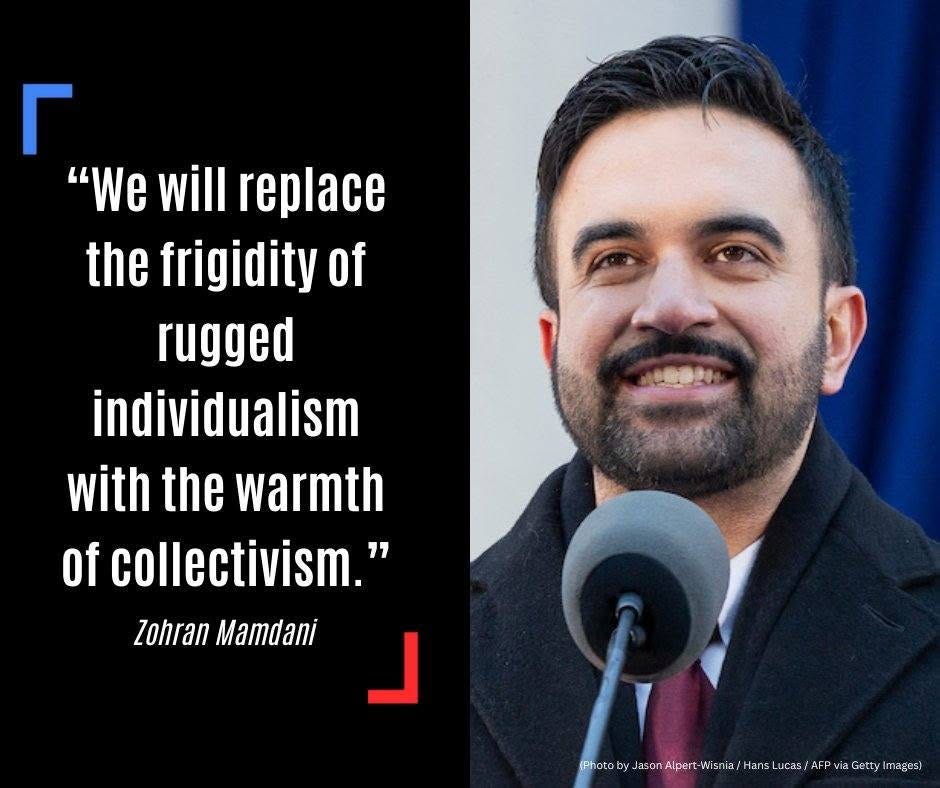
Taken together, these races suggest that the socialist movement in America continues to speak the language of working-class politics even as some of its most enthusiastic constituencies are young, urban, and highly credentialed Americans. Many people are understandably baffled by the spectacle: Why would some of the country’s most privileged and elite citizens vote for politicians who talk about seizing the means of production, demonize property owners such as landlords, rationalize bloody revolution and political violence—including October 7—and call for abolishing institutions such as the Senate and immigration enforcement?
But anyone who imagines this is a new phenomenon—or who retains a sentimental faith in higher education as an inoculation against fanaticism—has not studied the history of Democratic Kampuchea in the late 1970s. During the Khmer Rouge period, peasants carrying rifles may have committed many of the atrocities. Yet some of the people who supplied the abstractions—the revolutionary theories, the categories of enemies, the doctrines of class struggle, the visions of national purification, and above all the confidence that an entire society could be torn down and reconstructed from first principles—were intellectuals.
When I came to America for college in 2018, I had never encountered a group of people more eager to call themselves Marxists and demonize capitalism than college students, especially those in the humanities. I was an English major, and nearly every analytical lens I was taught seemed to run through the same postmodern, neo-Marxist framework: power, oppression, hierarchy, and the interests supposedly concealed beneath everything. For a while, I actually enjoyed constructing essays that way, learning to interpret literature through power dynamics and to argue against the capitalist West. There was something exhilarating about believing that I had acquired a new intellectual vocabulary capable of revealing what everyone else had failed to see.
I sometimes wonder whether some version of that exhilaration was felt by the Cambodian intellectuals who went to study in France and later became leaders of the Khmer Rouge. The comparison is not one of consequence but of intellectual temptation: the intoxicating belief that one has discovered a theory capable of explaining the world, dividing it cleanly between oppressor and oppressed, and identifying who stands in the way of liberation. And when that framework teaches that violence committed by the oppressed can itself be understood as an act of liberation, the distance between abstraction and justification can become disturbingly short.
In the late 1940s and 1950s, a generation of young Cambodians traveled to France to pursue higher education, many of them on scholarships. Among them were Saloth Sar, later known as Pol Pot; Khieu Samphan, who earned a doctorate in economics; Ieng Sary, who studied political science; Hou Yuon, who also earned a doctorate in economics; and other future revolutionary intellectuals. They were part of a broader circle of educated Cambodians who would eventually occupy senior positions in the communist movement.
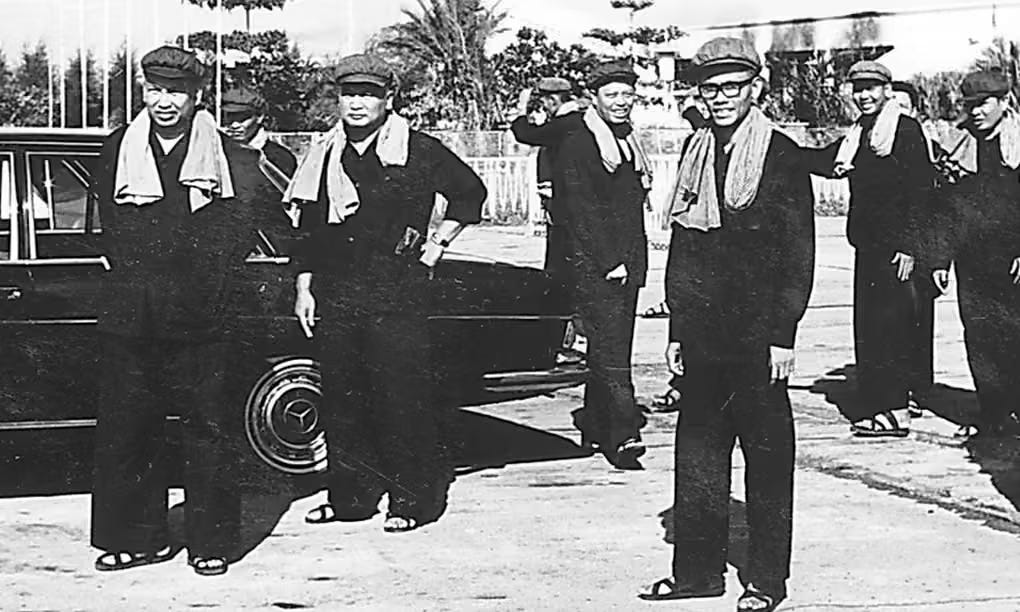
Paris exposed them not merely to French education but to the political passions of the postwar European left. Marxism was fashionable among intellectuals. Anti-colonial movements were gathering strength across Asia and Africa. The French Communist Party exercised considerable influence in universities and intellectual life. Cambodian students formed political organizations and discussion circles of their own; some joined the French Communist Party. They read Marxist texts, debated colonialism and class, and began imagining not simply an independent Cambodia, but what kind of society should replace the old one.
There is a profound irony here. One of the great promises handed down from the Enlightenment was that ignorance made people vulnerable and education could help set us free. We learned history so that we could recognize lies before they became orthodoxies. We learned how to reason so that slogans would not overwhelm judgment. We learned about the world so that some demagogue could not simply point to our neighbor and persuade us that he had suddenly become our enemy. Education, in this telling, was supposed to be a defense against fanaticism.
But what happens when the person dreaming up the revolution is not an uneducated peasant susceptible to propaganda, but an intellectual convinced that he has seen through the illusions blinding everyone else? What happens when education gives him not humility about the complexity of human society, but greater confidence that history itself has vindicated his ideas?
That is part of what makes the Khmer Rouge so unsettling because education did not simply fail to prevent the radicalization of its future leaders. In certain cases, it appears to have furnished the vocabulary through which that radicalization became intelligible: class struggle, exploitation, historical necessity, revolutionary violence, the purification of society.
Khieu Samphan is perhaps the most striking example of how an educated mind can give ideological resentment the dignity of scholarship. Before becoming one of the most recognizable faces of the Khmer Rouge, he wrote his doctoral dissertation, “The Economy of Cambodia and Its Problems of Industrialization.” Read today, parts of it can sound eerily familiar because the moral vocabulary is instantly recognizable to anyone who has listened to contemporary American socialists talk about wealth, ownership, landlords, finance, and exploitation.
Samphan wrote of the “disequilibrating impact of consumer demands from the rich strata,” singling out landlords and other members of the elite for their consumption of luxuries unavailable to the overwhelming majority of Cambodians. He argued that commerce and banking “add no value to the society” and instead “simply profit from a transfer of value issuing from other productive activities within society.”
His treatment of landlords is even more instructive. Samphan described a system in which “surplus rice has been extracted each year for export at the expense of peasant consumption” and argued that the peasant masses were kept in a “state of perpetual moral prostration as a result of semi-servitude, land rents and usury.”
Strip away the references to rice paddies and colonial Cambodia, and the argument would not sound entirely out of place at a meeting of the Democratic Socialists of America. The rich consume while others produce. Financiers extract rather than create. Landlords profit merely by owning. Wealth itself begins to look incriminating because profit is treated not as the possible reward for investment, risk, organization, or enterprise, but as evidence that value has been taken from somebody else. Economic relationships cease to be complicated arrangements among people with competing interests, incentives, obligations, and choices. They become moral indictments. Landlord and tenant, creditor and debtor, capitalist and worker are transformed from economic categories into opposing classes of innocence and guilt. Once the world has been reduced to those terms, confiscation no longer looks like theft, coercion no longer looks like coercion, and revolution can begin to masquerade as justice.
America in 2026 is not Cambodia in 1975. Mamdani is not Pol Pot. DSA members are not Khmer Rouge cadres. The differences in degree, circumstance, and consequence are immense, and pretending otherwise would cheapen the horror of what happened in Cambodia. History does not repeat itself so neatly, but neither does it leave us without warnings.
The lesson of the Cambodian intellectuals is that education does not necessarily protect us from fanaticism because intelligence can become fanaticism’s most capable servant. The educated mind is often better at questioning dogma, but it is also better at constructing it. It can furnish resentment with theories, prejudice with euphemisms, and cruelty with an elaborate moral lexicon that allows the person committing it to imagine himself humane.
We have already seen glimpses of that temptation in American life.
We saw it when Asian Americans were discriminated against at elite universities and the discrimination was repackaged as diversity; when racial balancing became social justice; when an admissions system that penalized individuals because too many people who shared their ancestry had succeeded could somehow advertise itself as antiracist.
We saw it after October 7, when Jewish Americans watched college students tear down photographs of kidnapped Israelis—some of them members of their own families—and heard academics and activists describe Hamas’s massacre in the antiseptic vocabulary of “decolonization” and “resistance.”
What disturbed me most about those moments was the confidence—the certainty that an abstraction could determine whose suffering deserved sympathy and whose could be explained away, while making those who embraced it feel perceptive and everyone outside it seem naïve.
Perhaps what higher education should cultivate is the understanding that the purpose of learning is not merely to acquire more sophisticated explanations of the world. It is to acquire enough knowledge of the world to become suspicious of explanations that make it too simple. The killing fields did not begin with killing. They began with the confidence of young Cambodians gathered in Paris cafés and student apartments in the 1950s, speaking of exploitation and liberation, of peasants and landlords, of imperialists and revolutionaries—dividing a complicated country into categories that seemed to explain everything.
Jay, thank you for writing this. I work at a university with lots of people like what you describe. Critical theories make it so easy to divide the world into victims and oppressors. It requires little or no thought to make these kinds of distinctions - humans have been dividing the world into us versus them for millennia. Yet this is somehow repackaged as intellectualism.
All of this is followership and intellectual laziness at its finest.
Every communist revolutionary leader fits this pattern. Comfortably well off, university educated. All the way back to Marx himself.