

The Moral Hazard of Selective Recognition
Is terrorism a reliable path to legitimacy?

Is terrorism a reliable path to legitimacy?
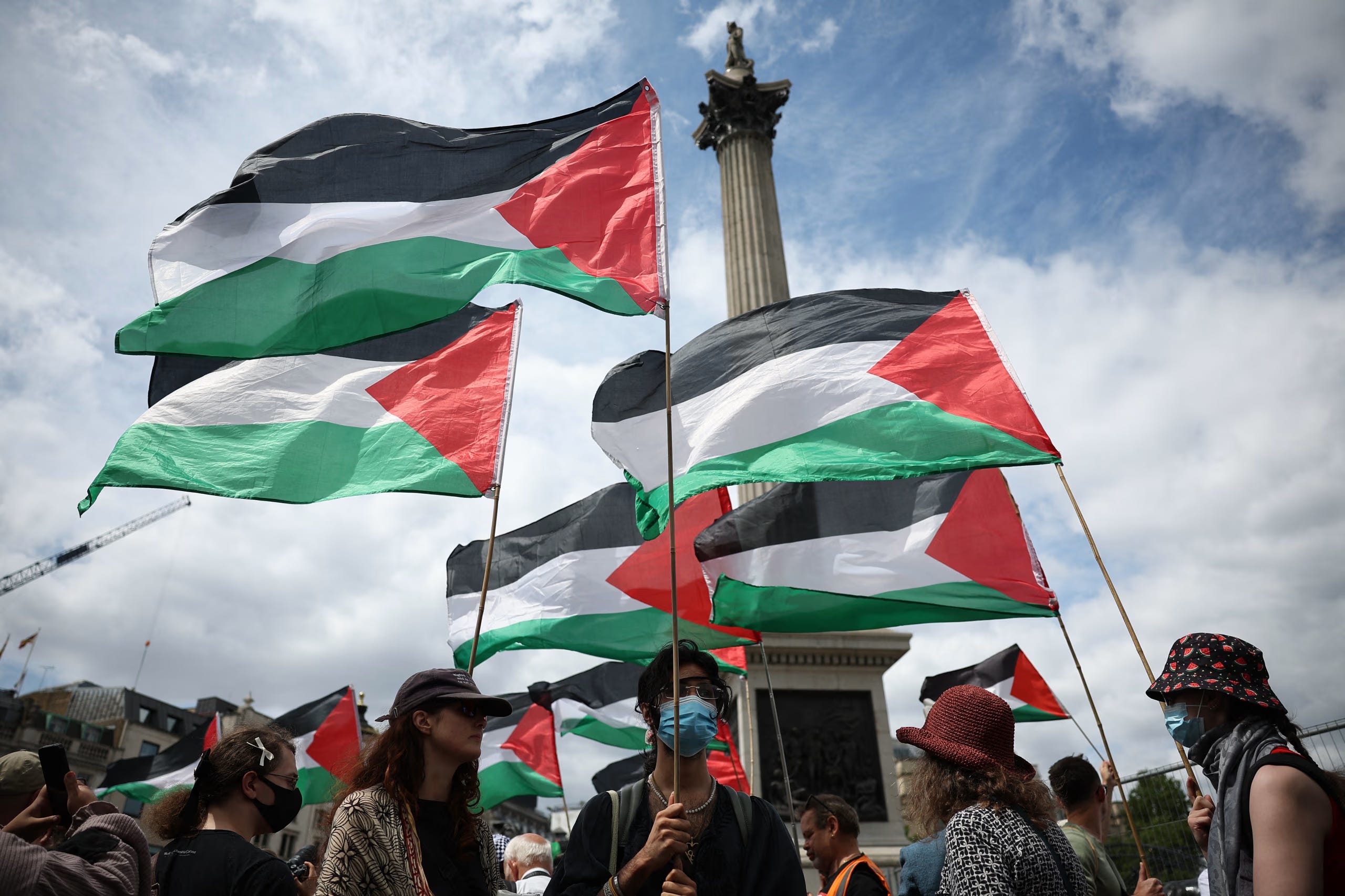
In recent years, some of the most respected Western democracies have seemed to answer that question in the affirmative. As of September 2025, roughly 156 countries officially recognize the State of Palestine. Among the newest to do so are at least ten Western states—including the UK, Canada, Australia, France, Portugal, Belgium, Norway, Spain, Ireland, and Monaco. Their decision signals more than a diplomatic shift: it flirts with the notion that political violence, when practiced long enough or loudly enough, may one day be rewarded with recognition.
That is precisely the wager Hamas has been making. In August, senior official Ghazi Hamad openly credited the group’s October 7 massacre for reviving the cause of Palestinian statehood on the international stage. “Without our weapons, no one would be looking in our direction,” Hamad stated in a broadcast interview with Al Jazeera. “We [Hamas] are the ones who brought the issue back to the forefront, and that is why all the countries are starting to recognize a Palestinian state.”
The West, it seems, is willing to indulge that boast. Nowhere was the symbolism stronger than in London. On September 21, British Prime Minister Keir Starmer announced, “Today, to revive the hope of peace for the Palestinians and Israelis, and a two-state solution, the United Kingdom formally recognizes the State of Palestine.” He added, “The man-made humanitarian crisis in Gaza reaches new depths. The Israeli government’s relentless and increasing bombardment of Gaza, the offensive of recent weeks, the starvation and devastation are utterly intolerable.”
However, if recognition were truly about principle—about the universal right of peoples to govern themselves—then why is Taiwan still left in obscurity? Here is a nation that does not merely aspire to sovereignty but already embodies it. Taiwan holds free elections, upholds the rule of law, defends its borders, mints its own currency, fields a capable military, and sustains one of the world’s most dynamic economies. And yet it is granted legitimacy by only twelve countries—none of them Western, apart from the Vatican City.
By any reasonable measure, Taiwan is more of a state than Palestine. The latter has no settled borders, and its governance is divided between two mutually hostile factions: the corrupt, unpopular Fatah-led Palestinian Authority in the West Bank and Hamas in Gaza. Corruption and terrorism have kept its economy and institutions in infancy. Democracy, the rule of law, and respect for human rights—the very values Europe proclaims as its creed—are absent in the Palestinian territories.
So why is Palestine deemed worthy of statehood while Taiwan is not? The difference, of course, is that Taiwan has committed no spectacular violence to announce itself to the world. Its crime, if it can be called that, is to live peaceably in the shadow of a larger neighbor—an empire whose economic gravity bends the conscience of every Western democracy that now congratulates itself on recognizing Palestine.
Consider Britain’s own words just months earlier. In June, Starmer’s government released National Security Strategy 2025: Security for the British People in a Dangerous World. On Taiwan, it declared, “It is the UK’s position that the Taiwan issue should be resolved peacefully by the people on both sides of the Strait through constructive dialogue, without the threat or use of force or coercion. […] We do not support any unilateral attempts to change the status quo.”
Or take France. In February, a spokesperson for the Ministry for Europe and Foreign Affairs affirmed, “France’s position hasn’t wavered. We stand by our ‘One China’ policy. France opposes any unilateral change in the status quo through the use of force, or through the threat of the use of force. We are committed to continued peace and stability in the Taiwan Strait.”
Stripped of diplomatic varnish, such statements mean only one thing: Taiwan must not declare independence. Beijing demands it, and Western capitals comply, casting self-determination as a destabilizing “unilateral change.” These are the same governments that tout “strong unofficial relationships” with Taipei, invoking shared democratic values. But they stop short of recognition—dressing friendship in euphemism while sidestepping the economic and strategic costs of angering Beijing.
Taiwan is not alone in this purgatory of non-recognition. Across China’s vast dominion lie the so-called “autonomous regions” of Tibet, Xinjiang, and Inner Mongolia—titles that read like cruel ironies. On paper, these lands enjoy cultural and political self-rule. In reality, they are laboratories of repression.
Unlike Palestinians in Gaza—who elected Hamas and whose rulers command an armed wing—Tibetans and Uyghurs have never wielded such leverage. Neither Tibet nor Xinjiang has stood apart from Beijing’s central grip. Their people are unarmed civilians, ground down beneath the surveillance machinery of the Chinese state. They stage protests, cling to their languages, keep traditions alive, and appeal to the world’s moral conscience, but they lack the militant capacity to frighten the international community into granting them sovereignty.
The record of their suffering is exhaustive. In Tibet, monasteries are gutted, language hollowed, traditions smothered. In Xinjiang, the world has watched satellite images of internment camps and read credible reports of forced sterilization, indoctrination, and the erasure of Uyghur identity. By any fair reading, Xinjiang is closer to the textbook definition of genocide than Gaza.
However, no Western parliament rushes to recognize these peoples as sovereign. No new flags are unfurled at the United Nations. Because recognition is not about principle—it has never been about principle. It is about cost. Palestine is a safe indulgence. The West can wrap itself in moral virtue at Israel’s expense without imperiling its supply chains or risking war with Beijing. Taiwan, Tibet, and Xinjiang, by contrast, are explosive. To recognize them would be to defy the People’s Republic of China, and no Western democracy is prepared to hazard the wrath of its most indispensable trading partner.
And the fear is no abstraction. In 2018, the Civil Aviation Administration of China sent letters to 44 international airlines demanding that they cease referring to Taiwan, Hong Kong, and Macau as separate countries on their websites—or risk being deemed severely untrustworthy and subject to sanctions. The United States government condemned the move as “Orwellian nonsense.” Yet within months, almost every carrier—including American Airlines, Delta, and United—quietly complied, revising their listings to reflect Beijing’s “One China” posture rather than jeopardize access to the Chinese market. The same campaign of pressure also extended to global hotel chains such as Marriott International, as well as fashion and luxury brands from Zara and Gap to Versace, Coach, and Givenchy. All these billion-dollar corporations capitulated in turn.
History is littered with examples where the legitimacy of states has been purchased not by virtue but by violence, not by justice but by convenience. Terror and expedience have so often been the midwives of sovereignty that one wonders whether the international order itself rests on this cruel arithmetic.
The Irish struggle for independence reached its turning point only after the Irish Republican Army (IRA) waged a guerrilla campaign against British forces from 1919 to 1921. Assassinations, ambushes, and reprisals scarred the island, creating a crisis that rendered the old order untenable. Violence was not the sole force at work—electoral legitimacy, civil resistance, and Britain’s postwar exhaustion all pressed upon Westminster—but it was among the pressures that drove London to negotiate. The result was the Anglo-Irish Treaty: the Irish Free State was born, a self-governing dominion within the Empire.
Likewise, Algeria won its independence after the National Liberation Front (FLN) launched an insurgency in 1954 to end French colonial rule. The FLN waged a brutal campaign—guerrilla warfare in the countryside, urban bombings in Algiers during the Battle of Algiers (1956–57), and targeted assassinations and massacres, some directed at settlers (pieds-noirs) and rival Algerians. These tactics left French society deeply shaken. Though the FLN never defeated France outright on the battlefield, it rendered colonial rule politically, morally, and diplomatically unsustainable. The war concluded with the Évian Accords of 1962, which granted Algeria its independence.
Even South Africa’s struggle, celebrated today as a triumph of moral resistance, carried an armed wing that forced the apartheid state to reckon with its mortality. Violence is not the whole story of legitimacy, but time and again it has been its accelerant.
The case of Taiwan exposes the paradox most starkly. For decades, it has done what the international community insists is the proper path: it has built institutions, safeguarded liberty, and sought concord with its neighbors. It has not planted bombs in foreign markets, hijacked planes, or slaughtered innocents to advertise its cause. Its restraint is its virtue—and also its curse. For the world has taught an unholy lesson: peaceable endurance earns you lectures on “status quo,” while violence buys you recognition.
Most of the world professes to desire a two-state solution. That principle, repeated like a catechism in every chancery from Brussels to Washington, is meant to signal moderation, restraint, and the hope that peace might one day be brokered between Israelis and Palestinians. But the timing and manner of recognition matter. Western leaders cannot conjure a state ex nihilo as a gesture of domestic virtue-signaling and expect it to serve as a foundation for peace. By setting precedent in this way, the West is sketching the blueprint for what kind of world order it intends to underwrite.
And the Palestinians are not the only stateless actors watching.
Consider the Kurds. Scattered across four nations—Turkey, Syria, Iraq, and Iran—they have been alternately courted, armed, and betrayed by the West for more than a century. They raised militias that fought shoulder-to-shoulder with American soldiers against ISIS, spilled blood in campaigns not their own, and organized fragile elections in defiance of authoritarian neighbors. Yet no Western capital has been willing to jeopardize relations with Ankara, Damascus, Baghdad, or Tehran by recognizing a Kurdish homeland. If Palestine can be summoned into statehood through attrition and terror, why should disillusioned Kurds not conclude that escalation—rather than “responsible” autonomy—offers the only path to sovereignty?
Or take the Rohingya. Expelled from Myanmar, corralled into refugee camps in Bangladesh, and denied even the thin dignity of citizenship, they exist in a state of perpetual limbo. For them, Palestine’s sudden elevation will not read as a vindication of justice but as a stinging rebuke. It instructs them that martyrdom is the coin of legitimacy. Their quiet suffering, however immense, has earned them no seat among nations.
And then there are the Kashmiris, whose homeland has been sundered between India and Pakistan since 1947. Their protests are met with curfews, their ballots undermined by armed patrols, their aspirations treated as threats to regional stability. For decades, they have been told to wait—to trust in process, in law, in international mediation. Yet when they see the flag of Palestine raised among the nations, what lesson are they to draw? That patience is folly? That the world’s ear tilts only to those who cloak their cause in fire and fury?
If this is the precedent, then the 21st century risks becoming an age of endless insurgencies. Kurds, Rohingya, Kashmiris, Tibetans, Uyghurs, even Taiwanese—how many others will read the world’s logic and decide that legitimacy is not granted to those who build schools, hold elections, or wait upon the conscience of great powers, but to those who seize the stage with blood? What future can such a doctrine deliver except a world order governed by permanent rebellion?
This is the moral hazard of selective recognition. To reward violence with sovereignty is to sow the seeds of future wars, to invite every oppressed people to trade endurance for insurgency, and to erode the very architecture of international law. If the West wishes to defend a liberal order—an order where rights precede power, and law restrains force—then it must be consistent. It cannot crown one movement with statehood while condemning others to silence, nor can it preach the sanctity of peace while teaching that terror is the surest herald of legitimacy.
The question is not only what kind of Palestine the world will recognize, but what kind of world the recognition of Palestine will inaugurate. For in drawing these lines on the map, Western democracies are also drawing lines in history—lines that will either affirm the principle that liberty is earned by justice, or confirm the grim suspicion that in the international order of the 21st century, sovereignty belongs to those most willing to kill for it.